

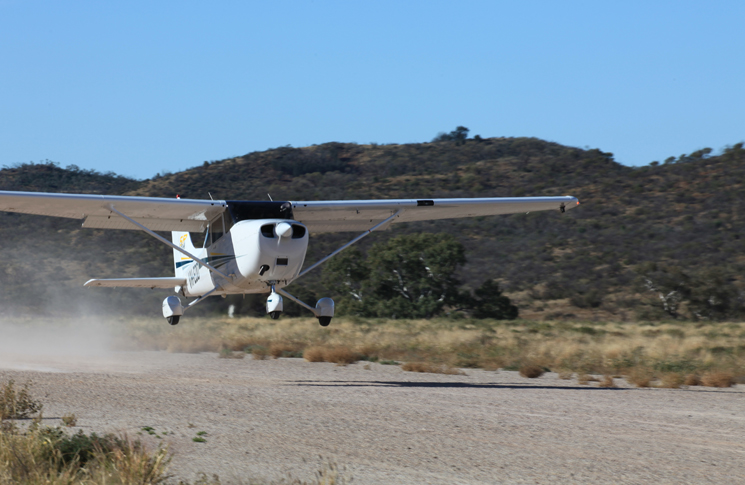
As it was a nice day, I thought it would be good to take the plane out for a trip around the local area and was wondering about performing an engine-off landing as I had practised doing them now and again quite successfully, just to be aware of a real engine-off landing should it ever really happen.
On the way back to the strip after a pleasant flight, I was wondering about how much further the plane would glide with the engine switched off and the propeller stopped.
So, joining downwind I throttled back to idle and then switched off both mags—the propeller was still spinning at 80 knots, so I slowed the aircraft back to 60 knots and the prop finally stopped. I then increased the airspeed up to 70 with the propeller still not spinning.
Now this was going to be a real engine-off landing. So, I thought, allow for a slight increase in gliding distance and extend my downwind leg just a bit more than I normally would, as if the engine was throttled back in a simulated engine-off landing, and with the prop still rotating. Everything was looking good as I turned base, and then onto final, putting in one stage of flap.
Looking to the airstrip I could see that this was going to test my judgement, so again, I slowed the plane down to 65 knots by raising the nose, and thought ‘um’ yes everything was still looking OK, so maybe slow down to 60 knots.
Now getting lower and closer to my intended touchdown and somehow realising at this point that I am not going to quite make it, I press the start button. The propeller turns but the engine does not fire up. With a dry mouth and getting even lower, I press the start button again. Still no power. ‘Heck, what is going on?’ I knew for sure l wasn’t going to make it to the strip and only had a few seconds left before touching terra firma and hitting the fence.
OK, it’s time to forget about trying to start the engine. Now only about 100 feet from the ground, I do a 90-degree turn into an adjoining paddock clear of any cows and fences and land safely, but with the stall warning blaring.
Wondering why the engine did not start, l realised I had not flicked on the mag switches before engaging the starter.
‘Bloody hell’, I thought. With my concentration fixed on trying to land on the strip with no power, and thinking I may not make it, why hadn’t I thought about those darned switches?
Contemplating my stupidity, l then switched on the mags, pressed the start button and the engine fired up instantly.
Luckily, the paddock was long and smooth enough to take-off out of, and I soon landed back at the strip with, need I say it, ‘power.
An elderly woman driving past spread the word around town than an aircraft had landed in the paddock near the airport. No one believed her. Everyone thought it must have just been a farmer in his ute, as nobody else had seen it, or maybe she was just a bit confused, poor old dear.
I kept quiet about this incident for a while, but then eventually owned up, admitting the woman was spot on recognising an aircraft in that paddock.
I learnt a couple of things that day. The aircraft did not seem to glide any further with the propeller stopped than with it spinning, so no need to switch off the magnetos to test that theory. And if you are practising engine-off landings, do not switch off the mags, just in case the motor does not fire up when you may need power for your intended touchdown, and causing little old ladies much concern.

Comments are closed.