

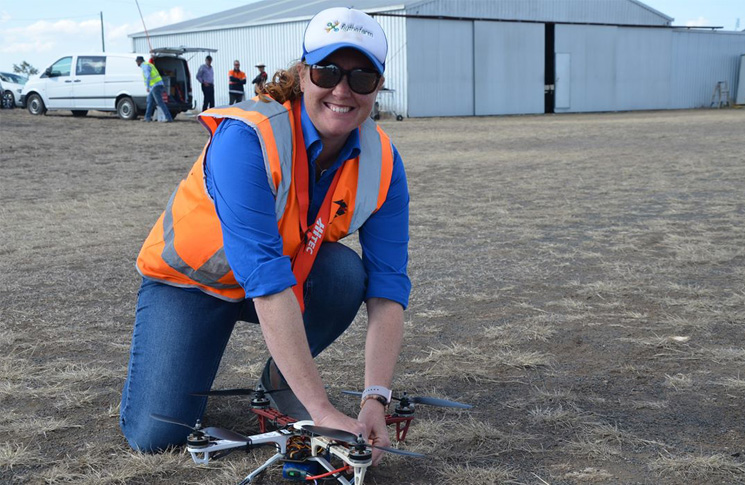
Aviation seemed the furthest thing from Meg Kummerow’s rural childhood in the Central Burnett region, of central western Queensland. ‘My background is in agriculture: I grew up on a beef cattle property, I’ve been involved in the beef cattle feedlot industry, the cotton industry and now the grains industry. It’s a very long way from aviation,’ she says.
But aviation is her business these days. As the founder of Fly the Farm, an agriculture-oriented drone sales and consultancy company, she merges her decades of expertise in agriculture with a newfound passion for unmanned aviation. And it’s all because she saw and acted on an opportunity.
‘I was involved in a grain industry conference that brought over an agricultural technology and drone expert from the US – this was in 2016, and it all started from there,’ she says.
‘We couldn’t get any drone sellers to sell at the conference—it was right on the cusp of when drones were becoming interesting to agriculture and I saw the opportunity for someone with an agricultural background to start providing drones and guidance to people in agriculture. I saw it as mainly focused on farmers but also for the agronomists and advisers out there, who need the technology.’
Despite holding a RePl she says most of her drone flying these days is private, mostly of a DJI Phantom 4. ‘I love photography, so I like that side of flying drones, sharing what happens on the farm and what we do on the farm. I’ve done live Facebook feeds of harvesting. Being able to talk and have people type in questions as you’re online is a powerful interactive way to show people what we do.’
She says the value of drones is how they can give farmers a literal new perspective on their farm and business. ‘You can look across a crop from the ground and think it looks really good but from the air you get a very different perspective. From the air you can see which areas are performing well and which aren’t performing well. ‘
These days Meg finds herself at the junction of two forms of aerial agriculture: drones and aerial application, where her husband took a ground-based job a few years ago during a dry spell on the land.
‘I’ve two main safety tips’, she says.
‘Always fly within visual line of sight and don’t fly if there are emergency operations underway. I’ve got a lot of friends who are aerial agricultural pilots who also do firefighting work so a really big concern of mine is ensuring there’s no negative impact from drones on waterbombing.
‘You might be tempted to put your drone up and see how far away a bushfire is—that prevents firefighting aircraft from getting in. They are down low at high speed and they don’t need you to add to their risks. So stay away from emergency operations because I want my friends to come home at the end of the day!’

Comments are closed.